Jaguar Land Rover  ·  Airbus Defence & Space

Chrissie Hare UX Portfolio

Human insight.
Extraordinary journeys.

Research, design, validation and real-world impact — on the road, in the air, for a brighter tomorrow.

  • People centred
  • Evidence based
  • Innovative solutions
  • Real-world impact
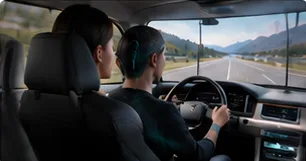
A passenger looking out of a vehicle window at mountains and a lake at sunset
Airbus A400M aircraft on a runway at dusk
Safer skies
2013UX practice since
£500kHorizon Europe funding secured
MultipleFeatures delivered for production
5+Academic research collaborations

Jaguar Land Rover · 2024 – Present

Reimagine tomorrow.

Setting UX direction across a portfolio of in-vehicle research — from driver wellbeing and automated driving to next-generation interaction and the smart cabin.

UX Leadership2024 – Present

UX Manager

Connect customer needs, Human Factors evidence and business priorities to shape safe, desirable and coherent in-vehicle experiences. Set direction, align teams and resources, and ensure UX delivers value across the vehicle lifecycle.
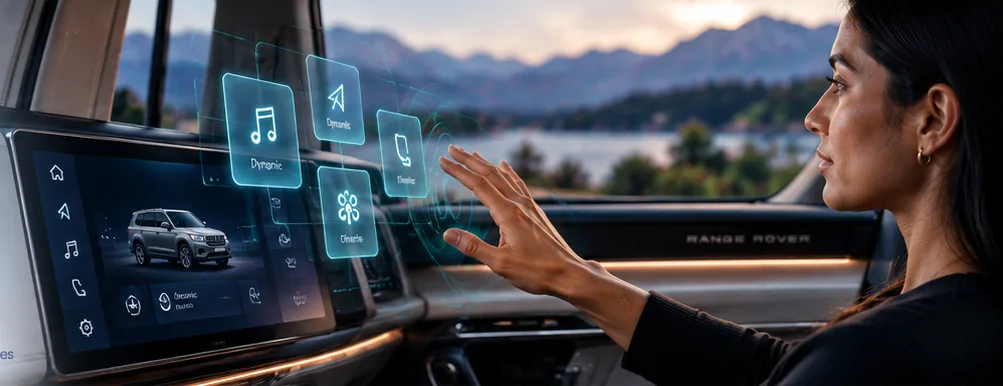
Driver reaching towards floating holographic controls beside the centre screen
01

Portfolio strategy & prioritisation

  • Define priorities and roadmaps aligned to brand, business and programme milestones.
  • Balance exploratory research with near-term development and production delivery.
  • Assess value, dependencies and resourcing to prioritise infotainment, ADAS, driver monitoring, voice, controls and cabin UX.
02

Cross-project leadership & delivery

  • Coordinate projects, milestones and dependencies across UX and Human Factors teams.
  • Connect research insights across programmes for consistency and joined-up experiences.
  • Track progress, risks and outcomes; turn evidence into design direction, requirements and product decisions.
03

People & capability development

  • Lead, line-manage and mentor multidisciplinary UX and Human Factors teams.
  • Develop skills in user research, usability, simulator studies, prototyping and evidence-led design.
  • Encourage collaboration, knowledge sharing and consistent ways of working.
04

Stakeholder engagement & governance

  • Partner with engineering, design, brand, CX, data science, legal and senior leaders.
  • Align stakeholders around customer evidence, constraints and product objectives; manage academic and industry partnerships.
  • Embed safety, usability, driver attention and regulatory considerations into UX decisions.
05

Innovation & customer experience

  • Guide exploration of AI-enabled experiences, natural-language voice, predictive interfaces and autonomous driving.
  • Balance innovation with usability, trust, comfort and safety.
  • Apply customer research and Human Factors evidence to differentiated in-vehicle experiences.
People-centredEvidence-basedCollaborativeFuture-focused

Iconic brands. Meaningful experiences.2025 – Present

UX & Human Factors Portfolio Manager

Lead strategic planning and cross-project coordination across a portfolio of automotive Human Factors and UX initiatives, aligning research and design priorities with business objectives, vehicle programme milestones and brand strategy.

Looking out of a glass-walled studio across a lake towards mountains, with a Range Rover parked outside
Portfolio prioritisation matrix plotting business impact against feasibility
Focus, fund, deliver

Portfolio strategy & investment

  • Prioritise and resource concurrent projects spanning infotainment, ADAS interfaces, driver monitoring and physical controls.
  • Balance exploratory research, including driver attention and workload, with applied research supporting production-focused development.

  • Manage budgets, team capacity and external partnerships, translating research insights into business cases and communicating portfolio progress, risks and impact to senior leadership.
A glass wall of sticky notes grouped under Share, Align and Accelerate
Align, share, amplify

Cross-project coordination & consistency

  • Promote consistency in research methods, tools and standards across teams, including simulator protocols, statistical approaches and UX heuristics.
  • Coordinate dependencies between projects and facilitate knowledge sharing, ensuring insights from one area inform related interface and vehicle experiences.
Stakeholder meeting with a presentation on JLR, university and industry partnerships
Collaborate, influence, deliver

Stakeholder engagement & governance

  • Act as a key interface between Human Factors and UX teams, engineering, design, legal and senior leadership.
  • Manage academic and industry partnerships, including university collaborations, PhD research and consortia, connecting research outputs with product development.
  • Human-centred
  • Collaborative
  • Evidence-based
  • Strategic
  • Impact-driven
Jaguar Land Rover × thymiaCurrent

In-Vehicle Driver Wellbeing Monitoring

Commissioning and directing UX research to create an AI-based mental health monitoring technology for in-vehicle use, with the goal of objectively detecting driver state — such as stress and burnout.

  • Less stress
  • Better focus
  • Reduced fatigue
  • Safer journeys
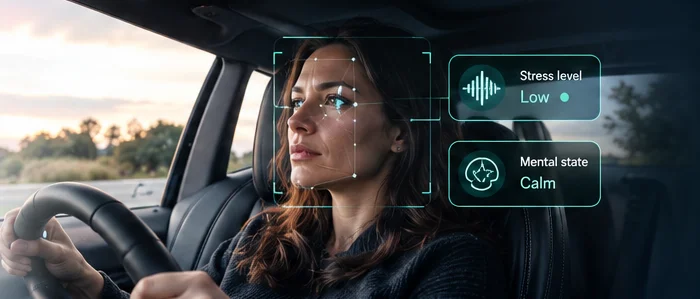
Driver monitoring overlay showing stress level low and mental state calm

How it works

AI-powered technology uses multimodal sensing to understand a driver’s mental state. We’re integrating this into the in-vehicle environment to provide real-time insights and support safer, healthier driving.

Voice

Analyses tone, pitch and speech patterns to detect changes in emotional state and stress levels.

Video

Tracks facial expressions, micro-expressions and gaze patterns to identify signs of fatigue, stress and cognitive load.

Behavioural signals

Monitors driving behaviour, including steering, lane keeping, head movements and interaction patterns.

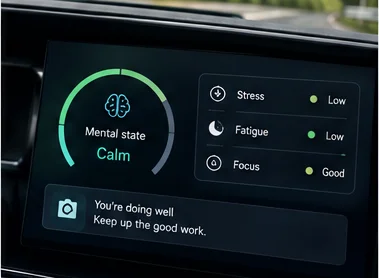
In-car screen showing mental state calm, with stress low, fatigue low and focus good
1

Phase 1 Complete

Algorithm validation and retraining. Directed an exploratory study to establish whether Thymia’s existing algorithms could be successfully retrained for JLR’s driver population and in-cabin environment — validated as successful.

2

Phase 2 In progress

Vehicle integration and expanded testing. Leading integration of the retrained technology into the vehicle and scaling up user testing to a larger population, moving from feasibility toward validated in-cabin deployment.

Key skills and expertise

  • Research commissioning and project leadership
  • Human-centred design
  • Multimodal sensing and AI integration
  • User testing and data analysis
Horizon Europe · Level 3 automated drivingCurrent

CERTAIN — CCAM Safety AssuranceHMI assessment workstream

Lead UX research and Human Factors assessment for Level 3 automated driving within CERTAIN, developing a human-centred Safety Assurance Framework for connected, cooperative and automated mobility.

£500,000funding secured to support the project
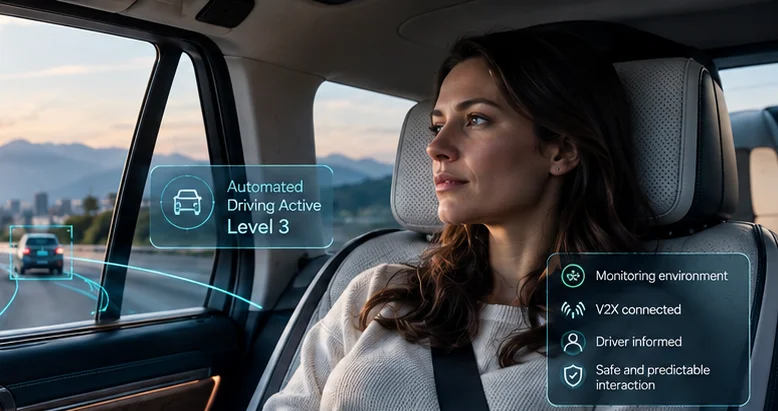
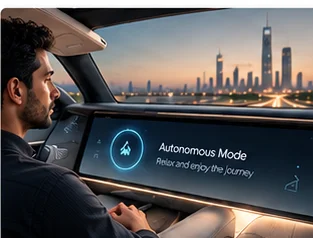
Passenger relaxing while an overlay shows Automated Driving Active, Level 3

Key contributions

Funding

Secured £500,000 in funding to support the project.

Level 3 HMI

Assess safe, predictable driver–vehicle interaction as part of wider AI automated-driving and V2X evaluation.

Safety assurance

Contribute to a framework spanning deployment and continuous safety monitoring.

European consortium

Work with partners to inform harmonised standards, certification and regulation.

Four pillars of the Safety Assurance Framework

Safety

Minimise risk and support reliable performance.

Trust

Build confidence through clear, consistent system behaviour.

Acceptance

Design interactions that meet driver needs.

Comfort

Support a pleasant and reassuring cabin experience.

Voice · Gesture · Haptics · WearablesCurrent

Next-Generation Interaction Modalities

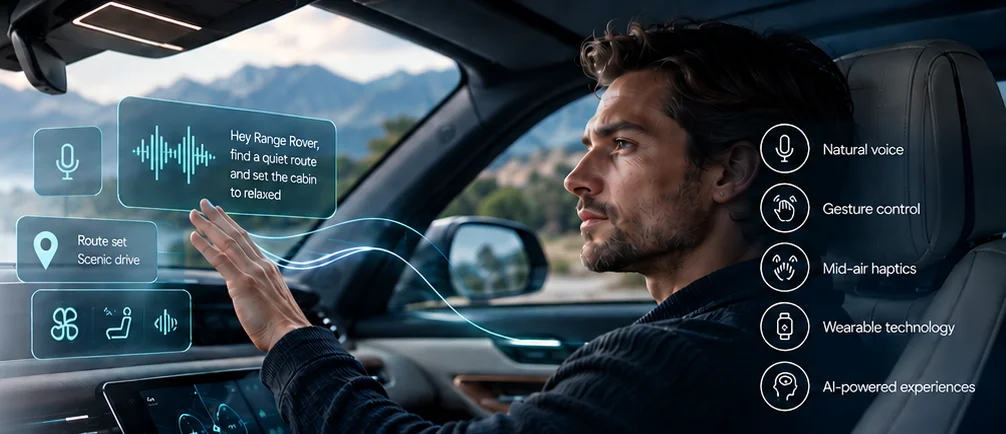
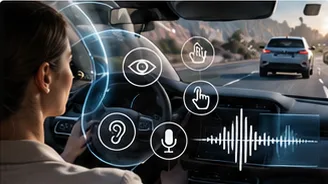
Explore next-generation ways for people to interact with their vehicles through natural voice, wearable technologies, gesture-based controls and touchless mid-air haptics.

Secured internal funding and lead Human Factors research into emerging interaction technologies for in-vehicle screens, exploring how touchless and motion-based interfaces can create more intuitive ways for customers to interact with their vehicles.

Driver using a mid-air gesture to interact with holographic voice and navigation controls

Touchless & wearable interaction

Hand hovering above a centre screen using mid-air haptics

Mid-Air Haptics & Hand TrackingUltraleap

Secured internal budget to investigate Ultraleap’s hand-tracking and mid-air technology, enabling touchless interaction with the centre screen.

  • Phase 1 (complete) — proved that Ultraleap’s technology could feasibly be used in the vehicle.
  • Phase 2 (in progress) — internal study to further validate use across all vehicle projects.
  • Next phase — integrating the technology into the vehicle.
Wrist-worn wearable controlling a centre screen with directional gestures

Wearable Mid-Air InteractionSix Degrees

Supported research into Six Degrees’ wearable, motion-based interaction technology, exploring how users’ movements can be translated into controls for smart devices.

  • Phase 1 (in progress) — proved that Six Degrees’ technology could feasibly be used in the vehicle.

Voice

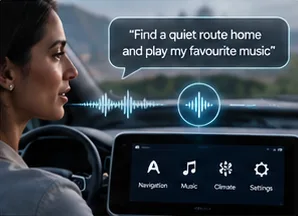
Driver asking a voice assistant to find a charging stop with good coffee

LLM Voice Research

Current

Support the UX & Human Factors research for LLM-powered voice agents, focusing on:

  • Evaluating the reliability, trustworthiness and consistency of agent responses.
  • Understanding which vocal content to prioritise in different situations for clear, relevant and context-appropriate in-car interactions.
Voice assistant confirming it will set the cabin to relaxed

Voice PhD — Academic Co-SupervisionUniversity of Nottingham

Current

Co-supervise a PhD investigating the acceptance of voice user interfaces (VUIs) in automotive settings. The research explores barriers to drivers’ use of in-vehicle voice systems and aims to develop a voice HMI that enhances the usability and adoption of voice interactions in the vehicle.

Smart cabin · MultisensoryCurrent

Next-Generation Interior Cabin Design

Extending the Smart Cabin project to develop a next-generation, smart and adaptive human-centred interior cabin, using a multisensory approach to shape how the space feels and responds to occupants.

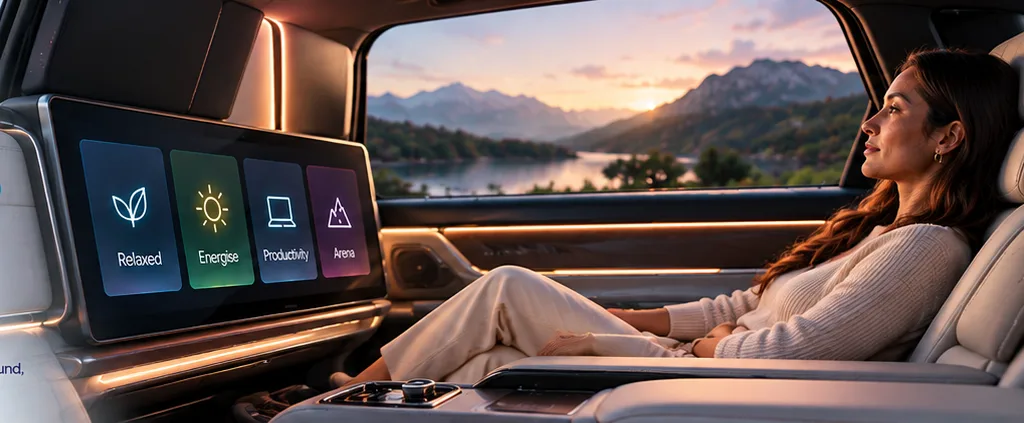
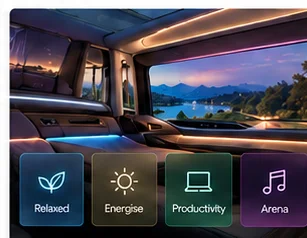
Rear passenger reclining beside a screen offering Relaxed, Energise, Productivity and Arena cabin modes

Configurable cabin moods

Investigating configurable cabin moods — including relaxed, energise, productivity, and arena states — to tailor the in-cabin environment to different activities and occupant needs.

Smart and adaptive

Exploring how the cabin can become smart and adaptive, responding dynamically to context rather than offering fixed, static settings.

Multi-sensory design

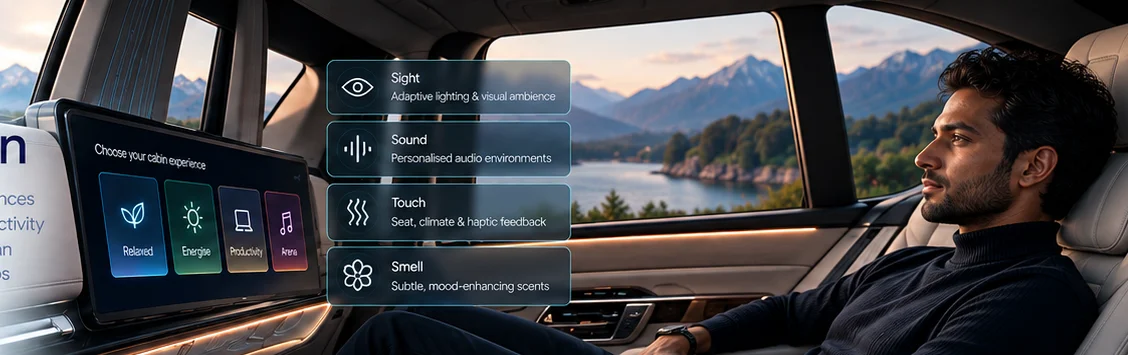
Investigating all senses except taste — sight, sound, touch, and smell — as levers to enhance and personalise the in-cabin experience.

Four cabin moods

Softly lit cabin with blankets at sunset
RelaxedA calm and comfortable environment for rest and relaxation. Soft lighting, calming audio, comfort temperature, subtle scent.
Bright daylight cabin
EnergiseAn uplifting environment to boost energy and focus. Bright lighting, dynamic audio, cooler temperature, invigorating scent.
Cabin set up with a laptop on a table
ProductivityA focused environment to work and stay connected. Task lighting, clear audio, optimal temperature, neutral scent.

Cabin with a large screen showing a concert
ArenaAn immersive environment for entertainment and shared experiences. Dynamic lighting, immersive audio, adaptive temperature, signature scent.
Jaguar Land Rover

Interior Cabin Design

Create intuitive, flexible and human-centred interior experiences for today and tomorrow. Explore how the cabin adapts to different activities, user needs and driving scenarios through configurable layouts, intelligent interfaces and multisensory design.

Passenger beside a cabin screen with sight, sound, touch and smell settings
Level 4 autonomous vehicle HMI concept

Autonomous Vehicle HMI (Level 4 Demo)

Developed a bespoke HMI for a Level 4 autonomous vehicle demonstrator, presented to the Crown Prince of Saudi Arabia.

Intuitive HMI · Future mobility

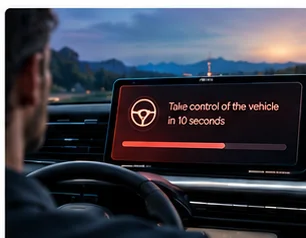
Level 3 automated driving handover concept

Level 3 Autonomous Driving

Designed HMI and interaction strategies for transitions between automated and manual driving, including step-down scenarios and clear, timely interventions in emergencies.

Clear transitions · Safety

Smart cabin configurable modes concept

Smart Cabin — Configurable Modes

Investigated relaxed, energise, productivity and arena cabin modes using sight, sound, touch and smell to create adaptive experiences for different activities and needs.

Multisensory · Adaptive

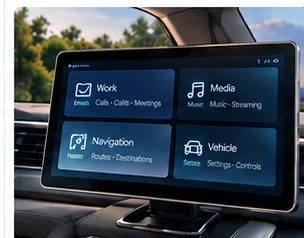
Configurable centre screen concept

Configurable Centre Screen

Explored adjustable centre-screen concepts for productivity and wider in-vehicle activities, with interfaces adapting to different scenarios and user needs.

Adjustable · Intuitive

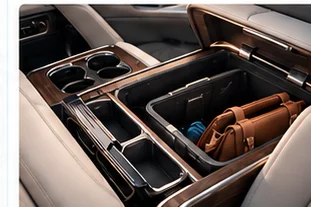
Configurable centre console concept

Configurable Centre Console

Defined customer needs for a flexible centre console, including repositionable items and use cases. Addressed deep-storage access and space for larger items such as handbags, laptops and specialist equipment.

Flexible storage · Usability

Biometric researchComplete · Internal

Emotional Engagement TestingiMotions Evaluation

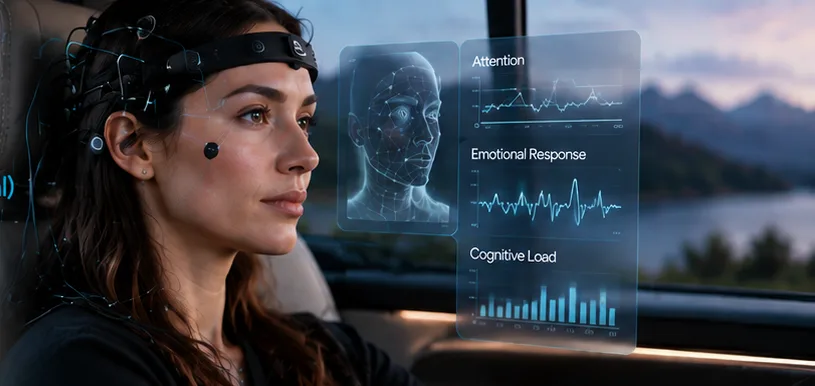
Leading an internal project to evaluate how iMotions, a biometric human behaviour research platform, could be incorporated into the UX research toolkit to study emotional and cognitive response holistically.

  • Multi-modal biometric analysis
  • Deeper understanding of emotional engagement
  • Integration with existing research methodology
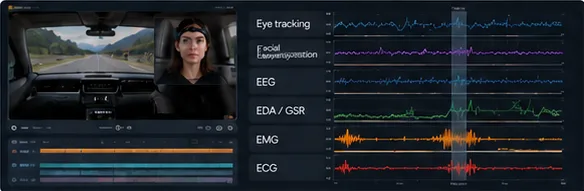
Driver wearing an EEG headset with attention, emotional response and cognitive load readouts

Multi-modal biometric data, synchronised in iMotions

Close-up of an eye
Eye trackingGaze behaviour and visual attention
Face with expression-tracking points
Facial expressionEmotional state and micro-expressions
EEG headset
EEGCognitive load and mental state
Wrist sensor
EDA / GSRPhysiological arousal and stress response
Neck sensors
EMGMuscle activity (e.g. facial, neck, posture)
Chest strap heart-rate sensor
ECGHeart rate and heart rate variability

Research environments

Participant in a driving simulator
Simulator testing
Vehicle on a mountain road
On-road testing
iMotions software showing synchronised biometric signal traces
Synchronised analysis in iMotions

Project objectives

Evaluate capability

Investigating iMotions’ ability to synchronise data across multiple biosensors within a single testing session.

Strengthen emotional engagement measurement

Assessing how multi-modal biometric synchronisation could enhance existing and future research workstreams (e.g. HMI assessment, driver wellbeing monitoring).

Integration into JLR research

Exploring practical integration into JLR’s research methodology, building on existing simulator and on-track testing capability.

Portfolio

Additional UX Research & Vehicle Innovation Projects

A portfolio of research and product development initiatives spanning fundamental UX, vehicle electrification, immersive experiences, intelligent assistance and cabin comfort.

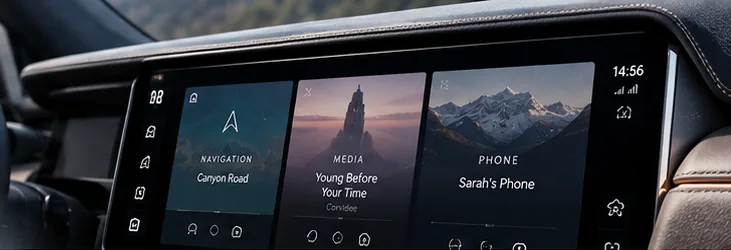
Range Rover dashboard with navigation, media and phone tiles on the centre screen
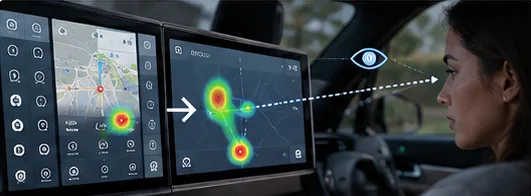
Eye-tracking heatmap over a centre screen layout

Fundamental UX ResearchVisual clutter & visual search optimisation

Complete
  • Evaluated how button count, colour and layout on the centre screen affect visual clutter and usability.
  • Measured attention management (glance duration, task time, reaction time) to support situation awareness.
  • Identified design principles to speed up visual search and reduce eyes-off-road time.
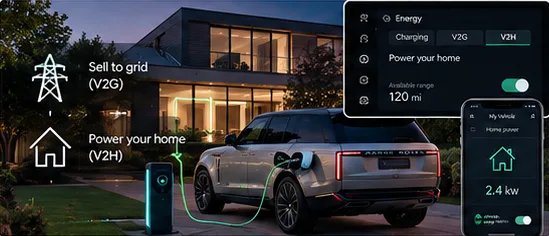
Range Rover charging at home with Vehicle-to-Grid and Vehicle-to-Home screens

Vehicle-to-Grid & Vehicle-to-HomeV2G / V2H

Going into production
  • Created a new feature enabling customers to sell electricity back to the grid or use their vehicle to power their home.
  • Delivered the complete strategy, including centre screen HMI, vehicle charge-port interface and customer app.
  • Supported the translation of the feature into a production-ready vehicle experience.
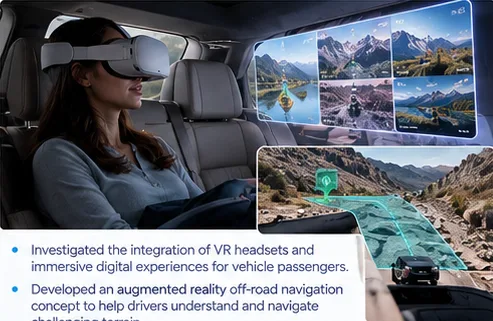
Passenger wearing a VR headset, and an AR off-road navigation concept

AR & VR Passenger Experiences

Complete
  • Investigated the integration of VR headsets and immersive digital experiences for vehicle passengers.
  • Developed an augmented reality off-road navigation concept to help drivers understand and navigate challenging terrain.
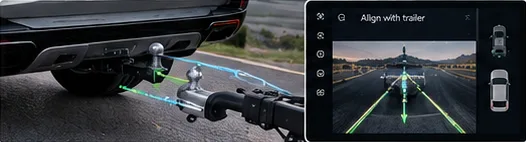
Tow bar alignment guidance on screen

Automated Hitch Assist

Going into production

Developed an intelligent trailer-hitching feature to simplify the process of connecting a trailer to the vehicle, reducing driver effort and improving the towing experience.

Defender powered tail door opening

Powered Tail Door — Defender

Going into production

Developed the powered tail door feature for the Defender programme, supporting a more convenient and intuitive customer experience.

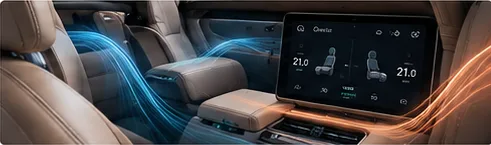
Cabin airflow visualisation for heating and cooling

Thermal Comfort & Cabin Climate

Paused
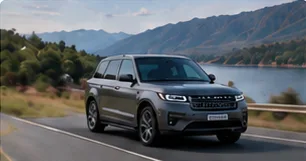
  • Investigated the impact of a new heating and cooling system on the in-cabin experience.
  • Explored alternative air-vent placements to improve comfort, usability and cabin integration.

Jaguar Land Rover · 2017 – 2024

Safe, intuitive, connected.

Building and leading the Human Factors function — from augmented reality navigation research to next-generation Range Rover controls, digital mirrors and world-leading academic partnerships.

2021 – 2024 · JLR

Human Factors Technical Specialist Manager

Led a multidisciplinary team to deliver human factors and user research across JLR vehicle programmes, ensuring our vehicles are safe, intuitive and aligned to real customer needs.

  • Safety
  • Usability
  • Accessibility
  • Customer experience
A presenter walking colleagues through a vehicle interior design

Lead and manage a specialist team

Built and led a team of 5 across human factors, UX research and software engineering.

Provide expert HF guidance

Consulted across the business on human factors, usability and regulatory requirements for all vehicle programmes.

Plan and deliver HF work

Defined and executed the human factors research and evaluation programme to meet vehicle and business objectives.

Collaborate across functions

Worked closely with design, engineering, product, legal and marketing to translate human factors insights into real-world solutions.

Ensure compliance and best practice

Applied industry standards and methods to support safety, usability and regulatory requirements.

Turn insight into impact

Translated research findings into clear recommendations and design solutions that enhanced customer experience and reduced risk.

My team (5)

Human Factors Specialists

Expertise in usability, workload, attention and safety.

UX Researchers

Customer research, concept evaluation and interface design insight.

Software Engineer

Prototyping, tool development and data analysis support.

How we worked

Consult

Engage with stakeholders to understand needs and requirements.

Plan

Define research questions, methods and resources.

Execute

Conduct user research, testing and evaluation (internal and external).

Deliver

Provide insights, recommendations and design solutions to support decision making.

Impact

Vehicle dashboard and centre screen
Real customer insightEnsured vehicle features meet user needs and real-world use cases.
Range Rover driving on a mountain road
Improved safety and usabilityReduced risk through evidence-based design.
Driver using the centre touchscreen
Business and customer valueDelivered human factors solutions that enhance the driving experience and support JLR’s strategy.
Driving safety projects

Digital Mirrors

Exploring and validating digital mirror technology to enhance safety, situational awareness and the driving experience.

Range Rover driving along a coastal mountain road
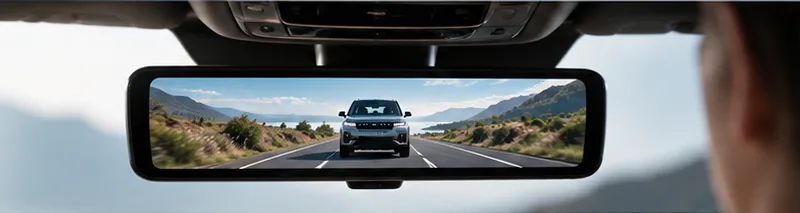
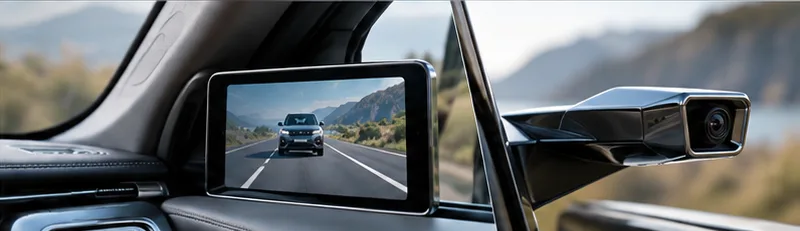
Digital rear-view mirror displaying the road behind

Digital Smart Rear View MirrorIn production across all vehicles

In production

Led and carried out human factors research into the introduction of a digital rear-view mirror, investigating how digital mirror technology could be integrated into the vehicle to support driver safety and situational awareness. The resulting solution is now in production across all vehicles.

  • Investigated how to integrate additional HMI elements into the supplier’s solution, ensuring the digital mirror experience met JLR’s usability and safety requirements.
  • Designed the HMI and ran studies with customers to validate the approach, feeding findings back into supplier and design decisions.

Improved rear visibility · Clearer view in poor weather · Reduced glare

Digital wing mirror camera and in-cabin display

Digital Wing Mirrors

Not progressed to production

Conducted human factors research into digital wing mirrors, investigating optimal placement and accommodation issues across different types of users. The project did not progress to production.

  • Researched mirror location and positioning to ensure usability and comfort across a diverse driver population.
  • Identified accommodation issues affecting different user groups, informing design requirements for the digital wing mirror system.

Optimal placement · Comfort for diverse users · Clear viewing experience

MIT AgeLab · Nottingham · Leeds

Academic Partnerships & Research

Collaborating with world-leading universities and research partners to advance human factors knowledge and develop next-generation methods, technologies and interactions for safer, more intuitive and trusted vehicle experiences.

Range Rover on a winding coastal road at sunset
Driver surrounded by multimodal interface icons

AHEADMIT AgeLab · Advanced Human factors Evaluator for Automotive Demand

Complete

Contributed to the MIT AgeLab’s AHEAD consortium, developing next-generation methods to objectively measure the attentional demand multimodal interfaces and advanced vehicle technologies place on drivers.

  • Move beyond fixed demand limits for individual modalities (visual, auditory, haptic, vocal, manual).
  • Optimise demand across dimensions and reframe evaluation from “driver distraction” to “driver attention management”.
  • Produce a quantifiable, objective toolkit for early-stage HMI evaluation.
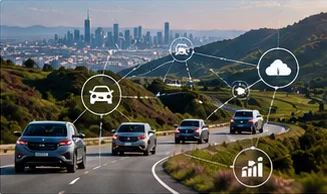
Connected vehicles on a highway with data overlays

AVTMIT AgeLab · Advanced Vehicle Technology Consortium

Complete

Contributing to the MIT AgeLab’s Advanced Vehicle Technology Consortium, a global academic-industry collaboration developing a data-driven understanding of how drivers across the lifespan use and respond to vehicle technologies — from driver-assistance systems to automated driving.

  • Combine real-world behavioural data with consumer attitude research.
  • Understand how drivers across the lifespan interact with vehicle technologies.
  • Inform safer, more trustworthy system design.
Driver speaking to an in-car voice assistant

Voice (PhD)University of Nottingham

On-going

Co-supervising research on enhancing the use of in-car voice systems, which offer hands-free, eyes-on-road interaction but see low adoption compared with the home. An interview study of 20 users and non-users identified key barriers (system performance, privacy, effort, past experience, and autonomy), which now inform the design of voice interfaces drivers will accept and use.

  • Understand barriers to voice adoption in the vehicle.
  • Identify user needs and expectations.
  • Inform the design of more natural, trusted and widely used voice interfaces.
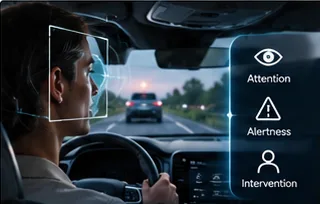
Driver monitoring system overlay tracking attention and alertness

Attention management (PhD)University of Nottingham

Complete

Co-supervised research on driver monitoring systems (DMS), now a requirement in all new vehicles, examining how drivers self-assess their visual attention to inform warnings and interventions they accept and trust. Presented at Contemporary Ergonomics & Human Factors 2025 with Jaguar Land Rover Research co-authors.

  • Explore how drivers self-assess their visual attention.
  • Inform warning and intervention design that drivers accept and trust.
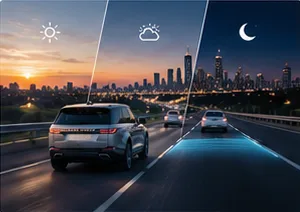
Vehicle in partial automation across day, dusk and night lighting

Partial automation (PhD)University of Leeds

On-going

Joint PhD investigating how drivers manage attentional demands in partially automated driving, focusing on the effects of lighting in the driving environment.

  • Investigate the impact of lighting conditions on driver attention in partial automation.
  • Understand how drivers manage attentional demands in different environments.
  • Generate insights to inform safer and more effective partially automated driving systems.
Range Rover · 2019 – 2021

Lead Human Factors / UX Researcher

Led and supported human-centred research to design intuitive, safe and engaging physical and digital interactions for next-generation Range Rover vehicles, from redesigned steering column stalks and steering wheel switches to voice and predictive touch interfaces.

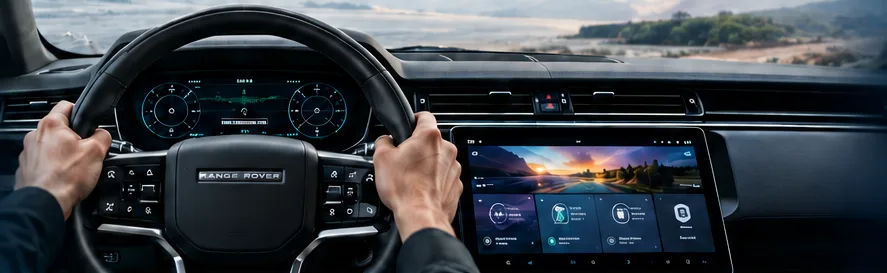
Driver's view of a Range Rover steering wheel, instrument cluster and centre screen

Physical controls

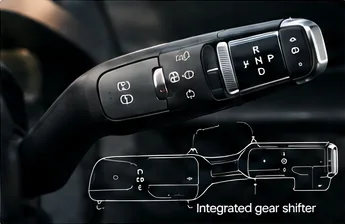
Redesigned steering column stalk with integrated gear shifter

Steering column stalks

Evaluated and helped redesign the stalks for the next-generation Range Rover, including a complete rethink that integrated the gear shifter into the stalk layout. Assessed layout, ergonomics and usability through simulator trials, physical mock-ups and user clinics, so key driving functions could be operated intuitively with minimal distraction.

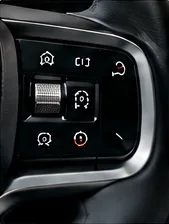
Steering wheel switch cluster

Steering wheel switches

Ran driving simulator studies to assess how quickly and accurately drivers could operate switch designs without taking their eyes off the road. Used findings on usability, error rates and distraction to redesign the layout in collaboration with the Design team.

  • Faster operation
  • Fewer errors
  • Less distraction
  • Improved usability

Digital and voice interfaces

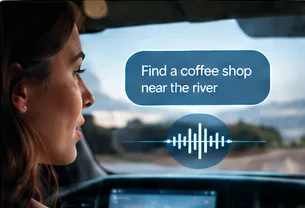
Driver asking a voice assistant to find a coffee shop near the river

Voice

Co-supervised a PhD (University of Nottingham, co-funded by JLR) on natural language interfaces for vehicle navigation, modelled on how drivers and passengers navigate together. Guided four on-road studies with 61 drivers comparing a satnav, informed and collaborative passengers, and a Wizard-of-Oz conversational interface. Showed that more interactive guidance improved environmental engagement (landmark recognition, route learning) without increasing workload.

  • Natural language
  • More environment engagement
  • No extra workload
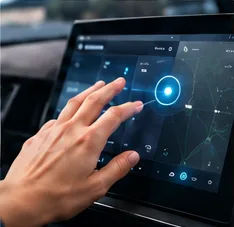
Finger approaching a touchscreen with predicted target highlighted

Predictive TouchUniversity of Cambridge

Collaborated on a gesture-prediction technology that infers a driver’s intended touchscreen target before contact, making in-vehicle interaction faster, more accurate and less visually distracting. Ran user studies evaluating distraction, workload and usability, helping move the concept from research towards production vehicle interfaces.

  • Faster interaction
  • More accurate selection
  • Less visual distraction

Skills gained

  • User journeys
  • Storyboarding
  • User stories and use cases
  • Customer requirements generation
  • Wireframing
  • Figma
2017 – 2019 · JLR · Contractor

Augmented Reality NavigationUniversity of Nottingham × Virginia Tech

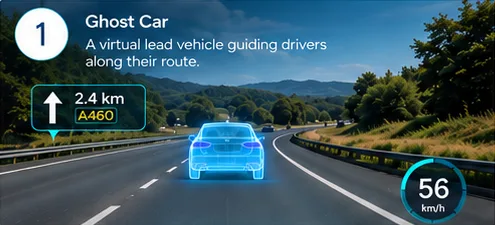
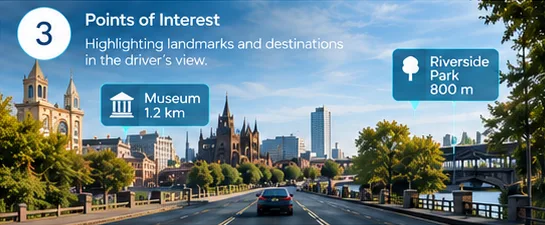
As Human Factors Researcher, led a collaboration between the University of Nottingham and Virginia Tech, developing three augmented reality navigation concepts: Ghost Car, Yellow Brick Road and Points of Interest. Managed the project end to end and ran multiple driving simulator and on-track studies in parallel, evaluating situation awareness, gaze behaviour, workload and usability to shape in-vehicle AR guidance.

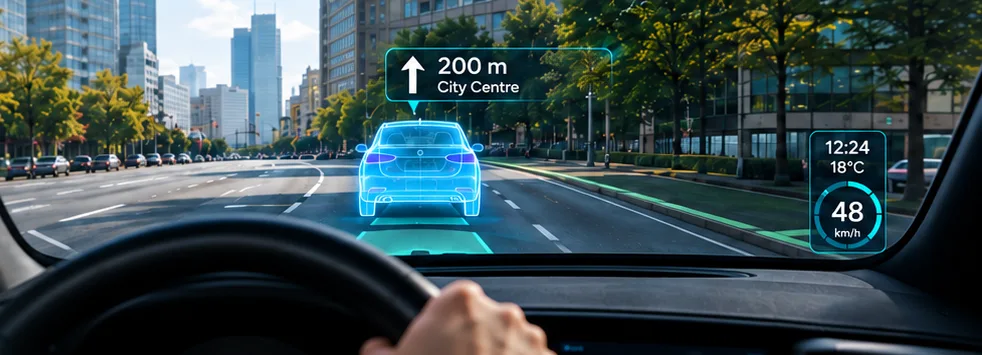
Windscreen head-up display showing an AR navigation arrow and a virtual lead car

Three AR navigation concepts

A translucent blue virtual car leading the way on a motorway
1 · Ghost CarA virtual lead vehicle guiding drivers along their route.
Yellow guidance lines painted onto the road ahead
2 · Yellow Brick RoadGuidance lines drawn onto the road surface.
Labels highlighting a museum and a park in the driver's view
3 · Points of InterestHighlighting landmarks and destinations in the driver’s view.

Research approach

Researcher reviewing concept designs
Design & managementConcept development, project management, stakeholder collaboration.
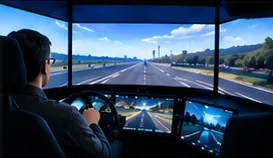
Participant in a wraparound driving simulator
Simulator studiesControlled environment, scenario testing, gaze and workload analysis.
Test vehicle on a track
On-track studiesReal-world validation, behavioural observation, usability assessment.
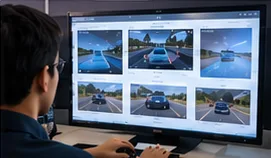
Analyst reviewing gaze heatmaps and charts
Data analysisQuantitative and qualitative, statistical analysis, insight generation.

Key skills

  • Visio
  • Experimental design
  • Simulator testing
  • On-track testing
  • Competitor benchmarking
  • Statistical analysis
  • Qualitative & quantitative data analysis

Airbus · 2013 – 2017

Safer skies. Brighter possibilities.

Human-centred design for mission-critical cockpits — from military airlifters to a single-pilot spaceplane.

Airbus Defence and Space · 2015 – 2017

Human-Centred Design for Mission-Critical OperationsSenior Human Factors Specialist

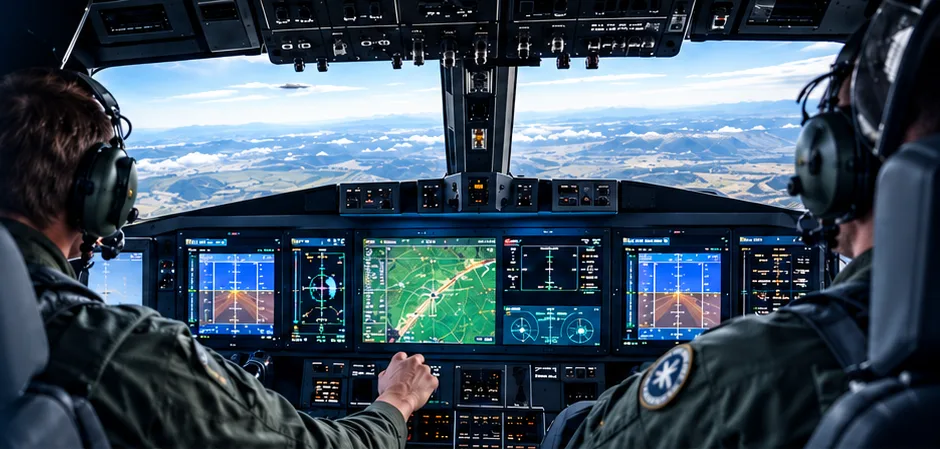
As a Senior Human Factors Researcher at Airbus Defence and Space, I led the human-centred design and evaluation of cockpit and mission-system interfaces for the A400M and C295, applying cognitive workload analysis, task and error modelling, and simulator-based usability studies to ensure crews could operate complex avionics safely and efficiently under demanding tactical and operational conditions.

I worked closely with pilots, systems engineers and certification specialists to turn operator needs into design requirements, validate display and control concepts against standards such as CS-25 and MIL-STD-1472, and iterate on HMI solutions that reduced crew workload, improved situational awareness, and supported certification.

Two pilots in a military aircraft cockpit with glass displays

Understand the operator

  • Interviews, observation and shadowing
  • Task and error modelling
  • Cognitive workload analysis

Design and evaluate

  • Cockpit and mission-system interface design
  • Simulator-based usability studies
  • Display and control concept validation

Work to standards

  • CS-25 (airworthiness)
  • MIL-STD-1472 (human factors engineering)
  • Certification support

Collaborate

  • Pilots and aircrew
  • Systems engineers
  • Certification specialists

Deliver impact

  • Reduced crew workload
  • Improved situational awareness
  • Supported certification
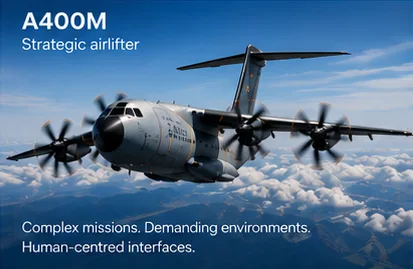
A400M strategic airlifter in flight above clouds
A400M · Strategic airlifterComplex missions. Demanding environments. Human-centred interfaces.
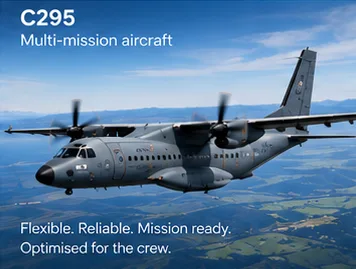
C295 multi-mission aircraft in flight
C295 · Multi-mission aircraftFlexible. Reliable. Mission ready. Optimised for the crew.
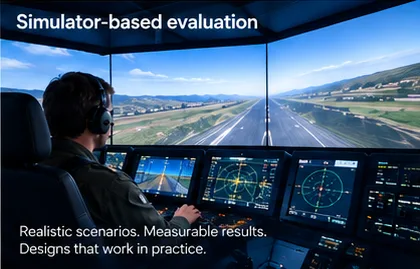
Pilot in a flight simulator
Simulator-based evaluationRealistic scenarios. Measurable results. Designs that work in practice.

The outcome

Safer operations

Clearer information and reduced errors.

Lower cognitive load

Simpler, more intuitive interactions.

Greater situational awareness

Critical information, when and where it’s needed.

Successful certification

HMI solutions aligned with CS-25 and MIL-STD-1472.

Airbus · 2013 – 2014

Human-Centred Design for Spaceplane OperationsHuman Factors Researcher

As a Human Factors Researcher at Airbus, I led the human-centred design and evaluation of cockpit and flight-management interfaces for the Spaceplane, focusing on the transition to single-pilot operations and on managing pilot workload across launch, microgravity, and re-entry.

I ran simulator-based studies with pilots and engineers to validate intelligent automation, decision-support displays, and control concepts that keep a lone pilot in the loop, adapted for high-g loads and restricted mobility.

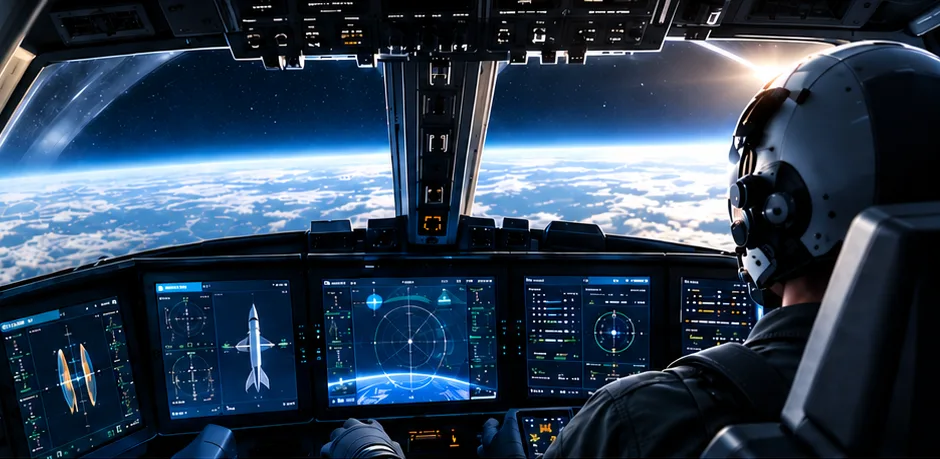
Pilot in a spaceplane cockpit looking out at Earth from orbit

Human-centred design

Designed intuitive, efficient interfaces for a single pilot in a high-stakes environment.

Simulator-based research

Ran studies with pilots and engineers to validate concepts and measure workload, usability and performance.

Intelligent automation

Tested decision-support displays and automation to keep the pilot in the loop.

Extreme conditions

Considered high-g loads and restricted mobility across launch, microgravity and re-entry.

Mission phases

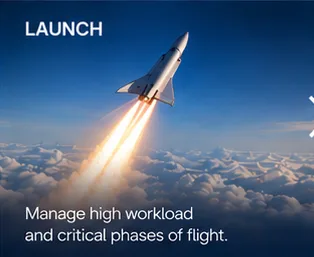
Spaceplane launching above the clouds
LaunchManage high workload and critical phases of flight.
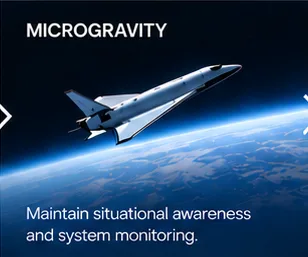
Spaceplane in orbit above Earth
MicrogravityMaintain situational awareness and system monitoring.
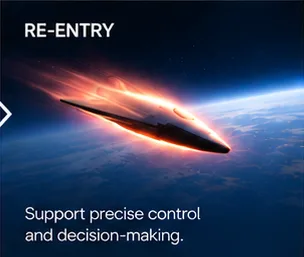
Spaceplane glowing during atmospheric re-entry
Re-entrySupport precise control and decision-making.
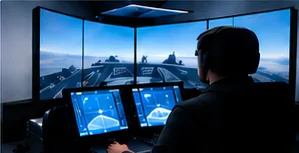
Pilot in a high-fidelity simulator
Simulator studiesValidated interface concepts with pilots and engineers in a high-fidelity simulator.
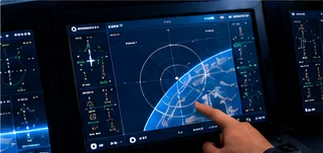
Hand interacting with a cockpit navigation display
OutcomeHuman-centred interfaces that are intuitive, reduce workload and keep the pilot in control — even in the most challenging conditions.